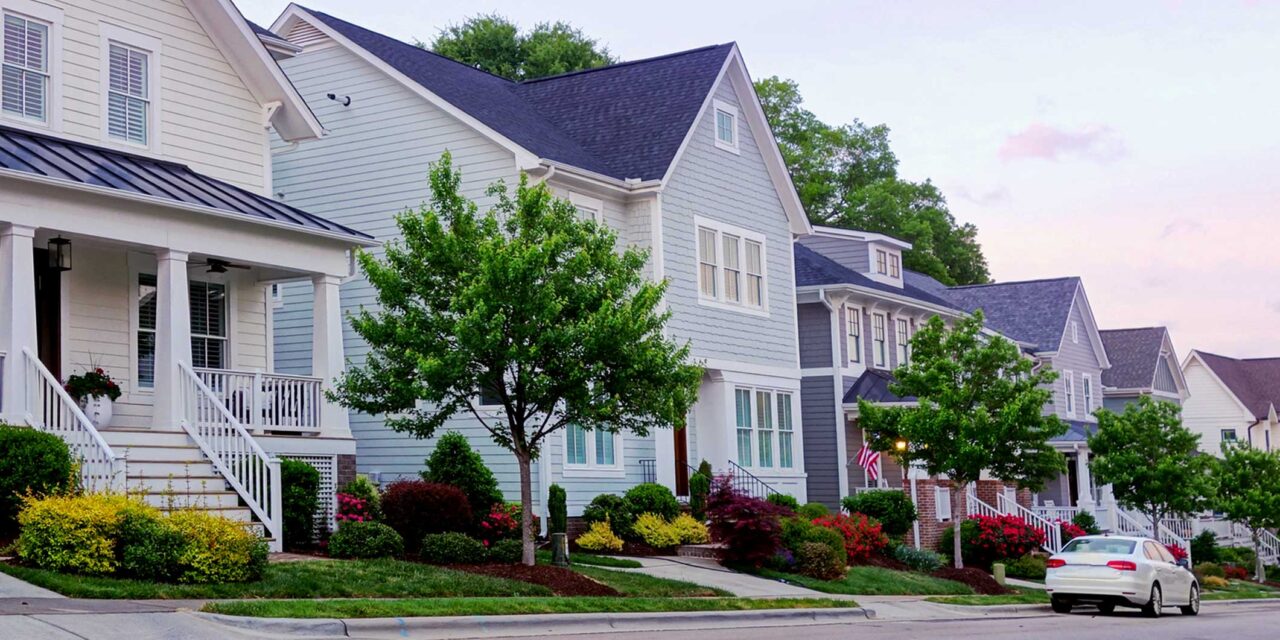
Homeowners across Maryland and Virginia often underestimate how much poor home insulation affects both comfort and cost. Many houses in the Mid-Atlantic lose money every month due to energy waste caused by inadequate insulation and air leaks, especially older homes built before modern standards.
The numbers are eye-opening. About 400,000 Maryland households spend more than 6 percent of their income on energy bills, and in Virginia, the burden is even higher, with more than 718,000 households paying above that threshold. A significant reason for this excess spending is simple: under-insulated or leaky homes let conditioned air escape and outdoor air creep in. The Department of Energy estimates that $200 to $400 of the average household’s annual energy spend is lost to drafts and poor insulation.
Maryland and Virginia homeowners can reduce that waste, but only if they understand where it comes from and how it affects the entire home. Foam InSEALators is here to help clarify exactly where that lost money comes from and how to keep more of it in your pockets.
Why the Mid-Atlantic Climate Makes Insulation More Important
Maryland and Virginia’s unique climate swings between hot, humid summers and cold winters, which puts constant pressure on a home’s building envelope. High humidity along the Chesapeake and coastal regions makes summer heat feel heavier. Winter cold seeps into attics, crawl spaces, and walls when insulation is thin or deteriorated.
If you’ve ever sat in your living room in January, shivering from a cold draft despite cranking up the heat, or felt your AC struggling against July’s muggy heat, poor insulation was likely part of the problem. A home that isn’t adequately insulated struggles all year long. The following sections explore how insulation issues lead to real costs for Maryland and Virginia homeowners — not only higher bills but also structural problems, health risks, and overall comfort.
How Poor Insulation Drains Your Wallet
When a home is under-insulated or leaky, your energy system works overtime to compensate. In winter, heated air slips out through gaps in the attic, walls, and rim joists. In summer, hot outdoor air pushes in. Energy auditors in Maryland and Virginia frequently find insufficient attic insulation and gaps around doors or windows as prime culprits in older homes. Those small leaks add up fast. Energy Star compares the total leakage in a typical house to leaving a window open 24 hours a day.
Common signs of poor insulation include:
- High energy bills
- HVAC systems running constantly
- Rising utility costs even without increased usage
Air-sealing and insulating attics, floors, and crawl spaces can cut heating and cooling costs by about 15 percent on average. Neglecting insulation means paying for energy that never stays inside your home.
Moisture, Mold, and Structural Damage in Humid Climates
Poor insulation isn’t just expensive. It also puts your home’s structure and your health at risk. The Mid-Atlantic’s humid summers create ideal conditions for condensation and mold when a house isn’t properly insulated or air-sealed. Warm, moisture-heavy air moves into cooler attics or wall cavities and condenses on cold surfaces, much like water droplets forming on a chilled glass.
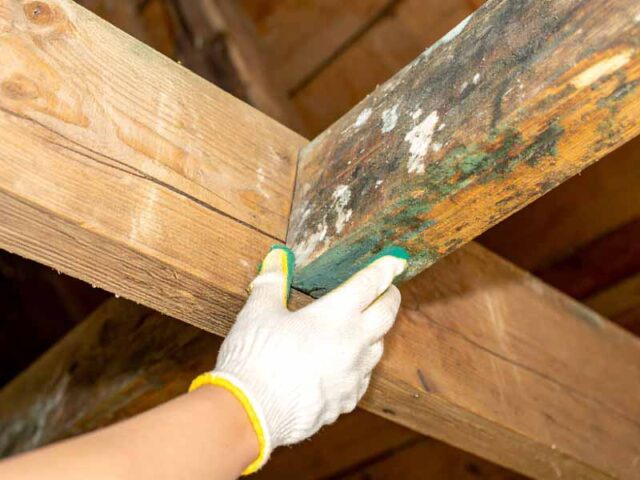 Over time, that recurring moisture encourages mold, mildew, and even wood rot in structural framing. Insulation plays a crucial role in preventing this. By keeping interior surfaces warmer and limiting the intrusion of humid air, proper insulation reduces condensation and helps prevent the damp conditions that mold needs to grow. Experts note that insulation, when paired with appropriate ventilation, can significantly reduce this risk.
Mold isn’t a minor nuisance. The EPA links indoor mold exposure to respiratory issues, allergic reactions, and asthma flare-ups in sensitive individuals. No homeowner wants to expose their family to that.
Improving insulation, sealing air leaks, and ensuring adequate ventilation work together to keep moisture out and your home dry. This not only prevents costly structural repairs and mold remediation but also protects your family’s long-term health.
Why Poor Insulation Causes Ice Dams in Winter
Maryland and Virginia don’t see New England–level snowfall, but winter still brings enough freezing weather for ice dams to cause serious trouble. When an attic is poorly insulated, heat from the living space rises and warms the roof from below. That melts the underside of the snowpack, which then refreezes along the colder roof edges, forming an ice ridge.
As that ice builds, it can push water backward under shingles, behind gutters, and even into walls or ceilings. Local roofing contractors and insurers see this every winter, and the resulting repairs to shingles, drywall, plaster, and framing are often expensive.
The root cause is simple: heat escaping into the attic. Stop the heat, and you stop the ice dams. Both Maryland and Virginia building codes reflect this by requiring substantial attic insulation, with Maryland calling for roughly R-49 in our climate zone and Virginia following similar standards. Air sealing between the conditioned living space and the attic is just as essential to prevent warm air leakage.
Spray foam insulation is especially effective here because it creates a continuous air barrier. By stopping air exchange entirely, spray foam removes the pathway that allows warm indoor air to reach the roof deck, which helps eliminate the conditions that trigger ice dam formation.
When the attic is adequately insulated and sealed, the roof stays cold, snow stays frozen in place, and winter storms don’t turn into water damage. Investing in the proper attic insulation is one of the most reliable ways to protect your home’s structure and prevent seasonal damage in the Mid-Atlantic.
The Hidden Impact on Indoor Air Quality
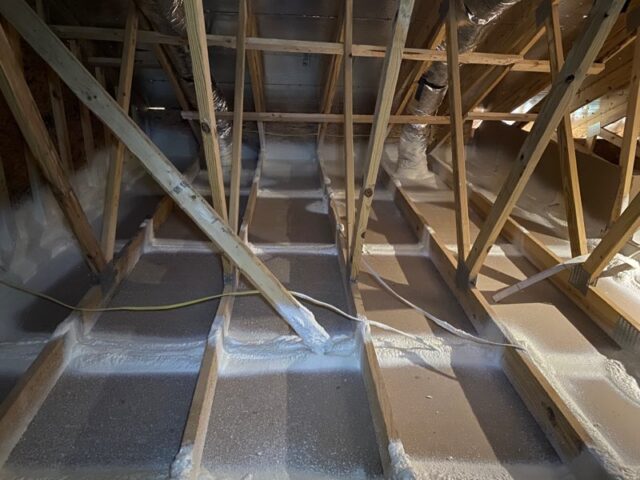 Upgrading insulation isn’t only about energy savings. It also significantly impacts indoor air quality, which many homeowners overlook. When a house has gaps in the attic, around windows, or along the foundation, those openings don’t just let conditioned air escape; they pull unfiltered outdoor air in. Dust, pollen, exhaust, smoke, and other pollutants can all slip through these cracks and circulate inside your home.
Proper insulation and air sealing create a tighter building envelope that helps block these irritants. According to the EPA’s Energy Star program, sealing leaks significantly reduces the amount of dust, pollen, and even insects that can enter the home. With fewer drafts, you also gain better control over indoor humidity, which boosts comfort and reduces mold risk.
Of course, homes still need intentional ventilation through bathroom fans, range hoods, or mechanical systems to remove indoor air and supply fresh outdoor air. The difference is that a well-sealed home lets you control that airflow instead of relying on random leaks.
The result is a cleaner, quieter, and healthier indoor environment. For anyone with allergies or asthma, minimizing outdoor allergen infiltration can make a meaningful difference. Upgrading insulation supports a healthier living space as much as it improves energy performance.
Gaps and Cracks Also Invite Pests Indoors
Air leaks don’t just waste energy. They also create easy entry points for pests. Mice, rats, squirrels, cockroaches, ants, and other common household intruders are incredibly adept at squeezing through even the most minor gaps. Experts note that a quarter-inch opening — about the width of a pencil — is large enough for a mouse, and a half-inch crack can let a rat in.
Poorly insulated or poorly sealed homes often have multiple weak spots around pipe penetrations, attic vents, crawlspaces, and wall joints. Once pests get inside, they can nest in insulation, chew wiring or wood, and leave behind droppings that create real health risks.
If you’ve seen insects slipping in through baseboards or heard scratching in the attic, upgrading insulation and sealing gaps can be a key part of the solution. Air sealing and insulation improvements don’t just improve efficiency; they act as an essential first line of defense in integrated pest management by closing off the pathways pests rely on.
While insulation isn’t a replacement for good sanitation or pest control, it fills a critical gap. A tightly sealed home denies pests the easy access they enjoy in a drafty, under-insulated structure, adding another layer of protection for your family and property.
Common Signs of Poor Insulation in Your Home
If you’re unsure whether your home is adequately insulated, look for these warning signs:
1. Sky-High Heating and Cooling Costs
If your heating or cooling costs seem unreasonably high (especially compared to similar homes or your own past bills), it may indicate that your home is losing too much heat or cool air to the outside.
2. Uneven Temperatures Between Rooms
Inconsistent temperatures (for example, an upstairs bedroom that never gets warm, or a first floor that’s always drafty) often point to insulation deficiencies or air leaks in certain areas.
3. Drafty Spots or Cold Floors
When walking through your home, do you notice drafty spots or cold surfaces? Cold interior walls, floors, or ceilings in winter (or warm to the touch in summer) are a telltale sign that insulation is lacking behind those surfaces.
4. Ice Dams or Frozen Pipes
As mentioned, icicles along the eaves or ice dams indicate heat is escaping through the roof, a classic result of poor attic insulation. Similarly, if your water pipes (or even parts of the walls) are icy cold in cold weather, it means the insulation in those exterior sections isn’t sufficient to keep the cold out.
5. Persistent Moisture or Mold
Condensation on windows, mildew in the attic, or mold in corners of exterior walls can suggest insulation and air-sealing problems. These issues occur when warm, moist air contacts cold surfaces- often found in an under-insulated, leaky house.
Conclusion: Protect Your Home, Your Health, and Your Wallet
Many Maryland and Virginia homes still rely on aging, inadequate insulation that no longer performs. The good news is that modern insulation solutions for Maryland and Virginia homes can often be installed quickly and deliver immediate improvements in comfort and efficiency.
Upgrading insulation and sealing air leaks helps create:
- Lower energy bills
- Even indoor temperatures
- Better indoor air quality
- Reduced mold and moisture risk
- Fewer pests entering through cracks
- A more energy-efficient, comfortable, and healthy home
At the end of the day, insulation is one of the few upgrades that pays you back month after month.
If you’re tired of rising energy costs or drafty rooms, Foam InSEALators can assess your home and recommend the best solution. Strengthen your home’s performance now, rather than waiting for the next cold snap or summer heatwave.
Contact Foam InSEALators today to improve your Maryland or Virginia home’s comfort, efficiency, and long-term protection.
References:
Energy Star. (n.d.). Why seal and insulate. U.S. Environmental Protection Agency. https://www.energystar.gov/saveathome/seal_insulate/why-seal-and-insulate
Maryland Energy Administration. (n.d.). Your home and the energy code [PDF]. State of Maryland. https://energy.maryland.gov/documents/yourhomeandtheenergycode.pdf
Maryland State Climatologist Office. (n.d.). Maryland climate narrative. University of Maryland. https://mdsco.umd.edu/ClimateInfo/md_climate_narr.php
Physicians, Scientists, and Engineers for Healthy Energy. (n.d.). Over 18 percent of Maryland households are burdened by high energy bills. PSE Healthy Energy. https://www.psehealthyenergy.org/over-18-percent-of-maryland-households-are-burdened-by-high-energy-bills/
Town of Yarmouth. (n.d.). Energy efficiency and electrification. Yarmouth, Maine. https://yarmouth.me.us/departments/sustainability_resources/energy_efficiency_and_electrification.php
University of Kentucky College of Agriculture, Food and Environment. (n.d.). Rodent control. Entomology at the University of Kentucky. https://entomology.mgcafe.uky.edu/ef641
U.S. Environmental Protection Agency. (n.d.-a). Indoor air quality and changing outdoor environments. EPA. https://www.epa.gov/indoor-air-quality-iaq/indoor-air-quality-and-changing-outdoor-environments
U.S. Environmental Protection Agency. (n.d.-b). Mold and health. EPA. https://www.epa.gov/mold/mold-and-health
Virginia Cooperative Extension. (n.d.). Insulation and mold prevention [FAQ]. Ask Extension. https://ask.extension.org/kb/faq.php?id=920144
Virginia Tech. (n.d.). Virginia household energy burden. VTechWorks. https://vtechworks.lib.vt.edu/items/8f3e2257-f2bc-43e1-8e95-b8c17ca67357