Baltimore homeowners are feeling the pressure of rising energy costs. BGE electric delivery rates have doubled since 2010, and supply rates jumped roughly 25% in 2025. But rising utility rates are only part of the problem. What’s happening inside your home may be costing you just as much.
Heating and cooling account for the largest share of energy use in most homes, according to the U.S. Department of Energy. If your home is under-insulated or has air leaks, you’re paying significantly more.
ENERGY STAR estimates that homeowners can save an average of 15% on heating and cooling costs by sealing air leaks and upgrading insulation. For a Baltimore homeowner spending $250 per month on BGE, that could mean wasting $30 to $40 every single month.
Rising BGE rates are only half the problem — if your Baltimore home is under-insulated, you’re paying to heat and cool air that escapes through your attic, walls, and crawl space. The DOE recommends R-49 attic insulation for Maryland’s Climate Zone 4A, but many older homes fall far short. Upgrading insulation and air sealing can reduce heating and cooling costs by up to 15%, and EmPOWER Maryland programs offer rebates of up to $7,500 or more through BGE’s Home Performance with ENERGY STAR program to help offset the cost.
Not sure where your home is losing energy? A free insulation evaluation can show you exactly where your BGE dollars are going and how to keep more of them, resulting in overall lower energy bills in your Maryland home.
Why Your BGE Bill Is Higher Than It Should Be
 Have you been feeling like your BGE bill is too high? You’re not alone. Energy prices are rising across Maryland. BGE electric delivery rates have doubled since 2010, and supply rates rose approximately 25% in 2025. These rate increases affect every customer, but not every homeowner is affected equally. Homeowners with poor insulation pay a compounding penalty because they use more energy to maintain comfortable temperatures.
In Baltimore’s Climate Zone 4A, homes face hot, humid summers and cold winters. That means your HVAC system works year-round. If your home is under-insulated, it runs longer, cycles more often, and drives your energy bill even higher.
The U.S. Department of Energy confirms that properly insulating your home reduces both energy costs and overall energy use. The difference comes down to one thing: how well your home holds conditioned air.
The Three Biggest Energy Loss Zones in Baltimore Homes
1. Attic Insulation
Your attic is the largest source of energy loss in most homes.
Without proper insulation, heat rises and escapes during winter and radiates into your home during summer. In Maryland’s climate, the Department of Energy recommends attic insulation levels for Baltimore of at least R-49, with R-60 considered optimal.
Many older Baltimore homes fall well below that standard, often rated R-19 or lower. That gap alone can significantly increase your energy costs.
2. Wall Insulation
Exterior walls are another major weak point, especially in older homes and rowhouses.
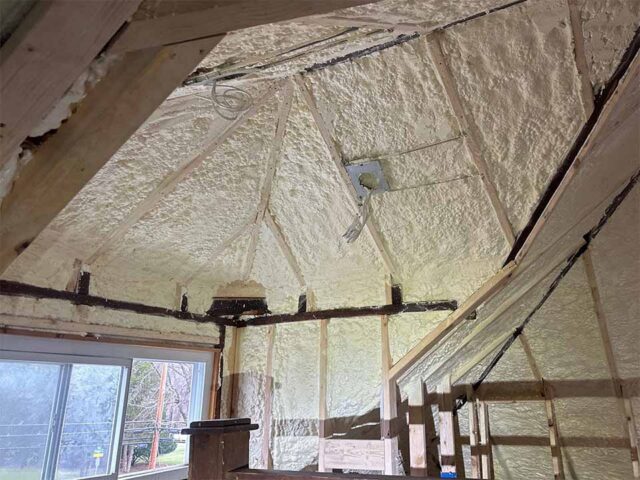
UMD Extension confirms that in Maryland’s climate of cold winters and hot, humid summers, uninsulated exterior walls can significantly impact energy efficiency. Uninsulated or poorly insulated walls allow year-round heat transfer. In winter, warm air escapes. In summer, heat pushes inward. The result is a constant strain on your HVAC system.
The Department of Energy recommends R-13 to R-21 insulation for exterior walls, depending on construction type.
3. Crawl Spaces and Basements
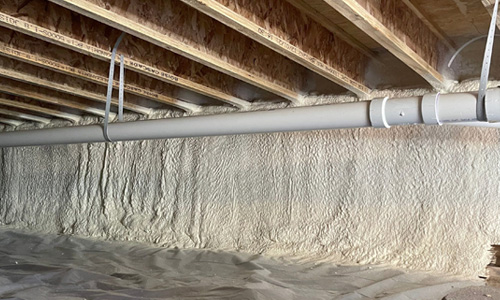 In Baltimore’s humid climate, crawl spaces and basements can pull conditioned air out of your home while introducing moisture. UMD Extension advises that vapor barriers are essential in Maryland to prevent moisture buildup that can damage insulation and structures.
Without proper crawl space insulation and vapor barriers, moisture can accumulate, damage insulation, and reduce its effectiveness. Air leaks at the foundation level also allow conditioned air to escape, increasing energy loss.
Properly sealing and insulating these areas is critical for maintaining efficiency and protecting your home long term.
How Much Can Insulation Actually Save on Your BGE Bill?
The 15% Savings Benchmark
Upgrading insulation and air sealing your Baltimore home is one of the most reliable ways to reduce energy costs.
ENERGY STAR estimates that homeowners can save an average of 15% on heating and cooling costs, or about 11% on total energy costs, by air sealing and insulating key areas such as attics, crawl spaces, and basements.
For a Baltimore homeowner spending $250 per month on energy, that translates to $300 to $450 in annual savings. And those savings increase as energy rates continue to rise.
Air Sealing Is Half the Battle
Insulation alone is not enough.
The Department of Energy emphasizes that insulation must be paired with air sealing to be fully effective. Gaps around light fixtures, plumbing, ductwork, and framing allow conditioned air to escape even when insulation is present.
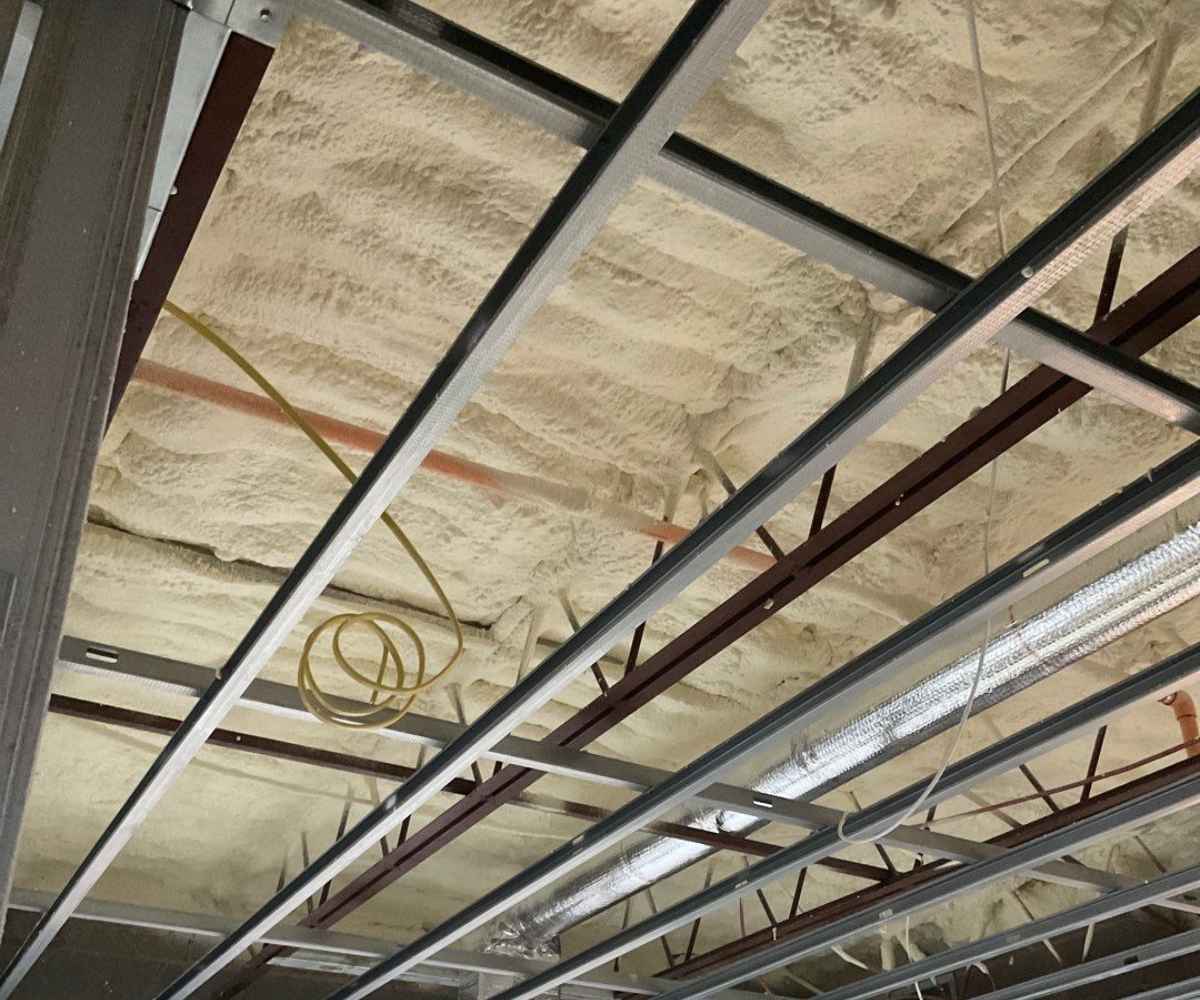
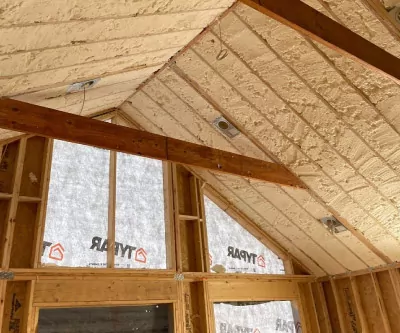
This is where spray foam insulation stands out. It provides both insulation and air sealing in a single application, making it especially effective for:
- Older Baltimore homes
- Rowhouse construction
- Balloon-frame walls
- Hard-to-reach attic spaces
Rebates and Programs That Help Baltimore Homeowners Pay for Upgrades
EmPOWER Maryland Through BGE
 The EmPOWER Maryland Energy Efficiency Act created the EmPOWER Maryland program to incentivize energy efficiency through Maryland’s five largest electric utilities, including BGE. The program offers free or discounted energy audits, weatherization, and incentives for insulation and air sealing upgrades.
Through BGE’s Home Performance with ENERGY STAR program, homeowners can access:
- Rebates of up to $7,500 or more
- Discounted or free home energy audits
- Incentives for insulation, air sealing, and duct sealing
BGE also offers free Quick Home Energy Checkups to identify insulation deficiencies, air leaks, and other energy waste at no cost to the homeowner.
BeSMART Home Loan Program
For larger projects, the Maryland BeSMART Home Loan Program offers:
- Low-interest loans up to $30,000
- Financing for insulation, air sealing, and HVAC upgrades
- Eligibility starting at a 640 credit score
Frequently Asked Questions
Why is my BGE bill so high even when I’m not using more energy?
BGE electric delivery rates have doubled since 2010, and supply rates rose approximately 25% in 2025. But if your home is under-insulated, you’re also paying to heat and cool air that escapes through your attic, walls, and crawl space — compounding the impact of rate increases.
What R-value should my Baltimore attic have?
The U.S. Department of Energy recommends R-49 for existing attics in Maryland’s Climate Zone 4A, with R-60 being ideal for maximum efficiency. Many older Baltimore homes have R-19 or less.
How much can I save by upgrading my insulation?
ENERGY STAR estimates homeowners can save an average of 15% on heating and cooling costs by air sealing and upgrading insulation. For a homeowner spending $250/month on BGE, that could mean $300–$450 saved annually.
What type of insulation is best for older Baltimore homes?
Spray foam insulation provides both insulation and air sealing in one application, making it ideal for rowhouses, balloon-frame walls, and hard-to-reach areas. Blown-in fiberglass or cellulose is cost-effective for open attic floors.
Are there rebates available for insulation upgrades in Maryland?
Yes. BGE’s Home Performance with ENERGY STAR program offers significant rebates through EmPOWER Maryland.
Take Control of Your Energy Bills
Rising BGE rates are beyond any homeowner’s control, but how much energy your home wastes is not. Upgrading insulation and air sealing is the single most effective way to fight back against climbing utility costs.
For most Baltimore homes, the biggest opportunity is in the attic. Upgrading insulation to R-49 and sealing air leaks can reduce heating and cooling costs by up to 15%, with savings that grow every year as BGE keeps raising rates.
Contact Foam InSEALators today for a free insulation evaluation. As the largest independent spray foam contractor in Maryland and Northern Virginia, our experienced team helps Baltimore homeowners identify where energy is escaping and install the right insulation to stop it. Call (301) 948-1600 or contact us now to get started.
References
Maryland Energy Administration. “EmPOWER Maryland.” State of Maryland, energy.maryland.gov/pages/facts/empower.aspx.
U.S. Department of Energy. “Energy-Efficient Home Improvement Credit: Insulation and Air-Sealing Essentials.” Office of Clean Energy Demonstrations, www.energy.gov/cmei/buildings/articles/energy-efficient-home-improvement-credit-insulation-and-air-sealing.
U.S. Department of Energy. “Insulation.” Energy Saver, www.energy.gov/energysaver/insulation.
U.S. Department of Energy. “Where to Insulate in a Home.” Energy Saver, www.energy.gov/energysaver/where-insulate-home.
U.S. Environmental Protection Agency. “Methodology for Estimated Energy Savings from Sealing and Insulating.” ENERGY STAR, www.energystar.gov/saveathome/seal_insulate/methodology.
U.S. Environmental Protection Agency. “Rule Your Attic!” ENERGY STAR, www.energystar.gov/saveathome/seal_insulate/rule_your_attic.
University of Maryland Extension. “Home Energy: Insulation.” University of Maryland, extension.umd.edu/resource/home-energy-insulation.