

Updated May 2026
Many Baltimore homeowners upgrade their attic insulation or HVAC system, then still wonder why their first floor stays cold every January. The answer is usually at the very top of your foundation wall.
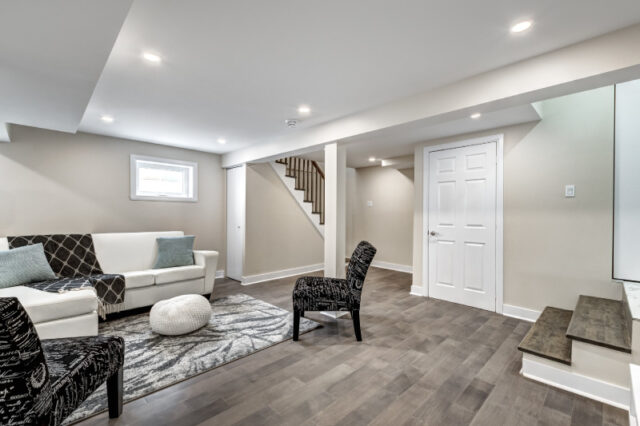 Box sills and rim joists are the thinnest part of your home’s exterior shell, and in most homes, they’re completely unsealed and uninsulated. Most of Maryland sits in IECC Climate Zone 4A (a mixed-humid zone), with real heating and cooling loads plus year-round humidity off the Chesapeake Bay. An unsealed rim joist leaks conditioned air every day. In summer, it allows humid air to condense against cool foundation surfaces, creating conditions for moisture, mold, and wasted energy.
Let’s explore why Climate Zone 4A basement insulation starts at the rim joists, what R-values to target, and how air sealing and the right materials address comfort, costs, and moisture. A home energy evaluation is a smart first step if you’re not sure where your home stands.
Why Baltimore’s Climate Zone 4A Makes the Basement a Priority
Baltimore City and its surrounding counties fall in IECC Climate Zone 4A, a mixed-humid zone with genuinely cold winters, hot summers, and elevated humidity throughout the year. Your basement strategy must manage both heat flow and moisture because R-value alone won’t cut it.
Maryland’s Building Performance Standards (MBPS), adopted in 2023, follow the 2021 International Energy Conservation Code (IECC). Together with the ENERGY STAR program, they set the Zone 4 R-values for basement insulation Maryland homes need: R-10 continuous or R-13 batt insulation for basement and crawl space walls, and R-19 for floors over unconditioned space. Most Baltimore homes built before 2010 fall short of these targets, making the basement one of the highest-return energy retrofits in this market.
Box Sills and Rim Joists: The Leak Most Homeowners Miss
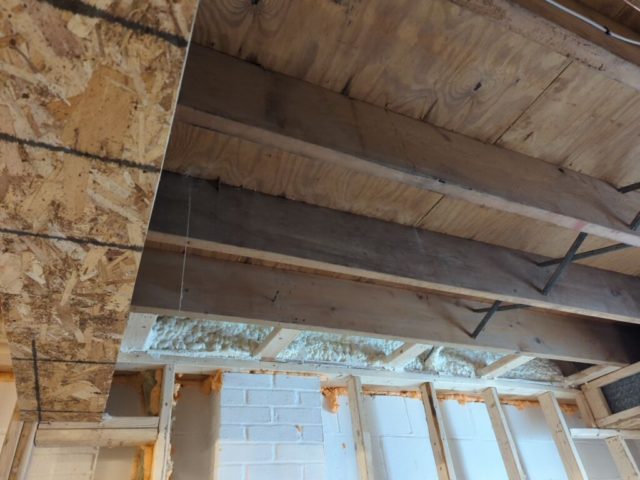 The box sill (rim joist) sits along the perimeter of your basement ceiling, where the wood framing meets the top of the foundation wall. It’s the thinnest point in your home’s exterior shell and one of the biggest sources of air leakage and heat loss.
Here’s what surprises most homeowners: fiberglass batts against an unsealed rim barely help. Air doesn’t just conduct through materials; it moves through gaps. Until those gaps are sealed, the insulation that sits over them does almost nothing. That’s why rim joist insulation and box sill insulation are air-sealing jobs first. The DOE recognizes the rim joist as a key air-sealing location and recommends sealing and insulating it as part of basement work.
During Baltimore winters, an unsealed rim line causes chilly basement floors and cold first-floor edges. In summer, those same gaps let humid air reach cool foundation surfaces, where condensation and mold take hold. Good basement moisture control Maryland homeowners need really starts here. Closed-cell spray foam insulation air seals and insulates in one step, and acts as a vapor retarder.
The Right Basement Insulation Approach for Zone 4A
Here’s how to insulate a basement in Maryland.
Step 1: Air Seal First
Seal the rim joist, sill plate, and any penetrations (pipes, wiring, ducts) before adding wall insulation. This controls energy loss and moisture. ENERGY STAR estimates homeowners can save about 15% on heating and cooling costs by air sealing and insulating attics, crawl spaces, and basement rim joists. The basement air sealing Baltimore homeowners do now pays off every season.
Step 2: Match Material to Location
At the rim joists and box sills, closed-cell spray foam is the standard. It seals and insulates in one pass and resists moisture, which matters in our humid climate. For foundation and basement walls, target R-10 continuous or R-13 batt and R-19 for floors over unconditioned space. Avoid leaving uncovered fiberglass batts in a damp, unsealed basement since Baltimore’s summer humidity can saturate the material and reduce its effectiveness.
If your home has a crawl space, include it in the plan. Crawl space insulation follows the same Zone 4A logic and improves comfort on the floors above.
Step 3: Treat the Basement as Part of the House
DOE guidance treats the basement as part of the home’s insulated envelope, not a buffer zone. When it’s properly insulated and air sealed, the whole house benefits with warmer floors, less HVAC cycling, and more stable comfort.
Frequently Asked Questions
Q: Should I insulate my basement in Maryland?
Yes. Baltimore and surrounding counties are in IECC Climate Zone 4A (Mixed-Humid), with heating and cooling loads plus year-round humidity. The DOE recommends starting at the rim joists to reduce energy loss and control moisture.
Q: What is a box sill or rim joist, and why does it matter?
The box sill (rim joist) is the framing at the top of the foundation wall, around the basement ceiling perimeter. It’s the thinnest part of your home’s exterior, a primary source of air leakage and heat loss, and the first place to seal and insulate.
Q: What R-value does a basement need in Climate Zone 4A?
ENERGY STAR targets R-10 continuous or R-13 batt for the basement wall R-value Maryland homes should meet, and R-19 for floors over unconditioned space. Confirm Maryland’s energy code for any code-specific requirements.
Q: Should I use spray foam or fiberglass in my basement?
Closed-cell spray foam is the right choice for the rim joists. It air-seals and insulates in one step and resists moisture. Exposed fiberglass in a damp, unsealed basement can absorb humidity and lose performance, so air seal first.
Q: Will basement insulation help with moisture and musty smells?
It can, but the air-leakage paths at the rim joist must be sealed first. The DOE confirms that air sealing and insulating reduce condensation and moisture buildup that cause musty odors and mold.
Ready to Seal Up Your Baltimore Basement?

In a Baltimore basement, the highest-return move is sealing the box sills and rim joists first, then bringing the foundation walls up to Zone 4A targets. That controls comfort, energy costs, and moisture together. The basement is just one part of the big picture, and attic insulation and the full home envelope all work together.
Contact Foam InSEALators today to schedule a free home energy evaluation. Our Baltimore team can first identify whether your rim joists, foundation walls, or air leakage needs attention, and recommend the right approach for your Climate Zone 4A home.
References
ENERGY STAR. “Methodology for Estimated Energy Savings from Sealing and Insulating.” U.S. Environmental Protection Agency, www.energystar.gov/saveathome/seal_insulate/methodology.
ENERGY STAR. “Recommended Home Insulation R–Values.” U.S. Environmental Protection Agency,www.energystar.gov/saveathome/seal_insulate/identify-problems-you-want-fix/diy-checks-inspections/insulation-r-values.
ENERGY STAR. “Sealing Air Leaks: Basement.” U.S. Environmental Protection Agency, https://www.energystar.gov/saveathome/seal_insulate/do-it-yourself-guide/sealing-air-leaks-basement
Pacific Northwest National Laboratory. “Air Sealing/Insulation.” Building America Solution Center, U.S. Department of Energy, basc.pnnl.gov/building-components/air-sealinginsulation.
Pacific Northwest National Laboratory. “Find My Climate Zone.” Building America Solution Center, U.S. Department of Energy, basc.pnnl.gov/building-assemblies/climate-zone-lookup.
ENERGY STAR. “Why Seal and Insulate?” U.S. Environmental Protection Agency, www.energystar.gov/saveathome/seal_insulate/why-seal-and-insulate.
University of Maryland Extension. “Home Energy: Insulation.” University of Maryland, https://extension.umd.edu/resource/home-energy-insulation.
Up Codes. “Maryland Energy Code 2021.” https://up.codes/viewer/maryland/iecc-2021/chapter/RE_4/re-residential-energy-efficiency#R402.1.3