

Updated June 2026
If you or someone in your household struggles with seasonal allergies or asthma, your home may be contributing to the problem. While many homeowners assume indoor air is cleaner than outdoor air, the EPA notes that common allergy triggers such as pollen, dust mites, pet dander, and mold spores often accumulate indoors.
In the Baltimore area and around Maryland, this challenge is amplified by our climate. Baltimore’s humid summers, fluctuating temperatures, and extended allergy seasons create ideal conditions for allergens to enter and build up inside homes. In a leaky home, outdoor allergens and excess moisture push inside through gaps in the envelope. Because most people spend most of their time indoors, exposure to these triggers can significantly affect comfort and health.
The good news is that air sealing for allergies in Baltimore can make a meaningful difference. Air sealing reduces the pollen, dust mites, and mold spores that enter your Baltimore home through gaps, cracks, and penetrations in the building envelope. Combined with insulation, humidity control (the EPA recommends keeping indoor relative humidity below 60%, ideally between 30 and 50%), and proper mechanical ventilation, air sealing helps create a healthier indoor environment that can reduce allergy and asthma triggers and improve overall indoor air quality performance.
If you’re concerned about indoor air quality, a professional home energy audit can help identify hidden air leaks and opportunities for improvement.
Why Baltimore’s Climate Makes Indoor Allergens Worse
 Baltimore and the surrounding counties fall within IECC Climate Zone 4A, a mixed-humid climate characterized by significant heating and cooling demands throughout the year. The region’s proximity to the Chesapeake Bay contributes to elevated moisture levels, particularly during the summer months.
This climate creates two major challenges for homeowners dealing with allergies. First, higher humidity levels encourage mold growth and support dust mite populations. Second, pollen and mold spores remain active for much of the year, increasing the likelihood that outdoor allergens will find their way indoors.
University of Maryland Extension emphasizes that an effective insulation and sealing strategy for this region must address both heat flow and moisture, not just heat alone. For homeowners seeking to reduce allergens in Baltimore homes, controlling moisture is just as important as controlling temperature. A tight building envelope helps limit both unwanted air movement and excess humidity. In a mixed-humid climate, managing what enters the home is essential for comfort, energy efficiency, and indoor air quality.
How Air Leaks Let Allergens Into Your Home
Many homeowners assume insulation alone protects their homes from outside contaminants. In reality, insulation and air sealing serve different purposes.
Insulation slows heat transfer, while air sealing blocks air movement through gaps and cracks in the building envelope. The two systems work best together, which is why air sealing and insulation for Baltimore homes often go hand in hand.
Common areas where homes leak air include:
- Attic bypasses and top plates
- Recessed lighting and ceiling penetrations
- Rim and band joists
- Gaps around windows and doors
- Plumbing and electrical penetrations
- Areas where the foundation meets the framing
These openings act as pathways for outdoor air that carries pollen, dust, mold spores, and other contaminants, the same indoor triggers the EPA flags as common allergy and asthma culprits, to enter the living space. They also allow humid outdoor air to enter the home, increasing moisture levels and creating conditions that can worsen those symptoms.
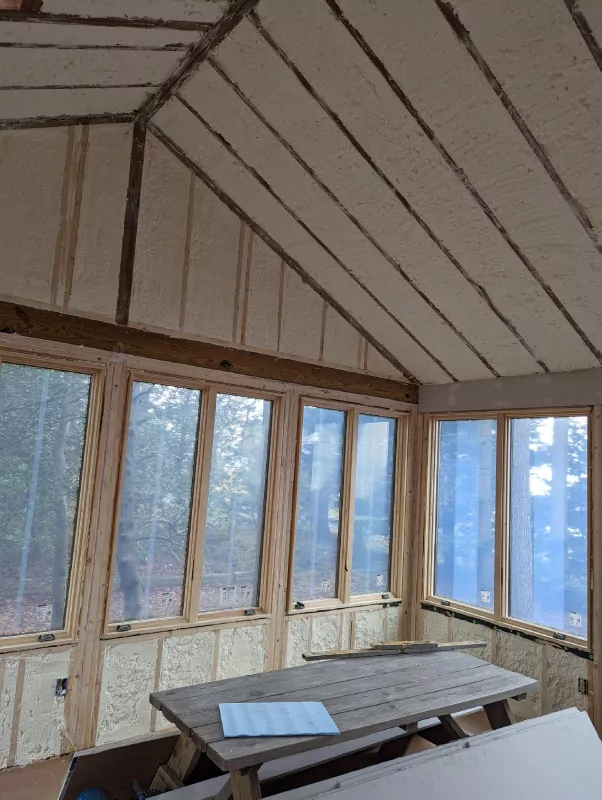
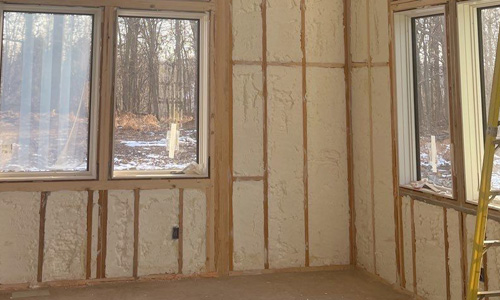
One of the most effective solutions for sealing these problem areas is spray foam insulation. Unlike traditional insulation products, spray foam both air seals and insulates in a single application, making it especially useful in rim joists, attics, and other hard-to-reach areas.
How Air Sealing Improves Indoor Air Quality and Eases Allergies
A simple way to think about air sealing is this: a tighter home is a healthier home. Sealing the envelope creates a barrier that reduces how much outdoor pollen, dust, and mold spores get pulled inside.
When there are fewer gaps in the building envelope, fewer allergens can enter the living space. By reducing the amount of outdoor air that infiltrates the home, air leaks and allergens may become easier to manage.
Air sealing also supports better humidity control, as controlling moisture is key to mitigating mold growth. The EPA advises keeping indoor relative humidity below 60%, ideally between 30 and 50%, to make conditions less hospitable to mold and dust mites. By limiting humid outdoor air from entering the home, air sealing helps control moisture levels and creates conditions that are less hospitable to these common indoor allergens.
Proper whole-house ventilation remains an important part of the equation. Because a tighter home exchanges less air on its own, controlled mechanical ventilation becomes important. While air sealing reduces uncontrolled air leakage, a well-designed ventilation system provides controlled, filtered fresh air. This balanced approach supports healthier indoor air without sacrificing energy efficiency.
Crawl spaces are another major source of moisture and airborne contaminants in Maryland homes. Humid air, mold spores, and other pollutants can migrate upward into living areas through the stack effect, making crawl space encapsulation an important part of indoor air health. Upgrading your crawl space insulation and sealing the crawl space can help improve indoor air quality while addressing a common source of moisture intrusion.
Air Sealing + Insulation: The Whole-System Approach
Air sealing delivers the best results when it is part of a comprehensive home performance strategy. When a tighter home envelope is combined with balanced ventilation systems such as ERVs or HRVs, homeowners can enjoy cleaner indoor air while maintaining energy-efficient performance year-round.
 According to ENERGY STAR, homeowners save an average of 15% on heating and cooling costs by air sealing and adding insulation in attics, floors over crawl spaces, and basements. These same improvements help reduce moisture infiltration and allergen entry, creating benefits that extend beyond energy savings.
For the best results, homeowners should follow a whole-house approach:
- Identify air leaks with a home energy audit.
- Air seal the most significant leakage points.
- Upgrade insulation to meet Climate Zone 4A recommendations.
- Ensure proper mechanical ventilation for the tighter home.
Modern home performance improvements are about more than energy efficiency. As discussed in the benefits of spray foam insulation, air sealing and insulation work together to improve comfort, manage humidity, and support healthier indoor air quality.
Frequently Asked Questions
Can air sealing help with allergies?
Yes. Air sealing closes the gaps, cracks, and penetrations that let outdoor allergens such as pollen, dust, and mold spores into your home. When combined with insulation, humidity control, and ventilation, air sealing reduces indoor triggers that aggravate allergy and asthma symptoms.
Does spray foam insulation improve indoor air quality?
Spray foam air seals and insulates in one step, closing leakage points that other materials leave open. By reducing allergen intrusion and helping control indoor humidity, a well-sealed envelope supports better indoor air quality, especially when paired with proper ventilation.
How does air sealing reduce mold in a Baltimore home?
Air sealing combined with proper ventilation helps control indoor humidity. Controlling moisture is key to mitigating mold. The EPA recommends keeping indoor relative humidity below 60%, ideally between 30 and 50%, to make conditions less hospitable to mold.
Which areas of my home should be air sealed for allergy relief?
The highest-impact areas are the attic (top plates, bypasses, recessed lights), rim/band joists, the crawl space, and the gaps around windows, doors, plumbing, and wiring. These are the main pathways allergens use to enter.
If I seal my home tightly, do I still need ventilation?
Yes. A tighter home exchanges less air on its own, so controlled mechanical ventilation (such as an ERV or HRV) becomes important. The EPA lists ventilation and source control among the core strategies for healthy indoor air.
Improve Indoor Air Quality with Air Sealing
There is no single solution for cleaner indoor air. However, in Baltimore’s mixed-humid climate, air sealing is one of the most effective steps homeowners can take to reduce allergen intrusion, manage moisture, and improve comfort.
When air sealing is combined with insulation, humidity control, and proper ventilation, the result is a home that is healthier, more comfortable, and more energy efficient.
If you’re ready to improve indoor air quality and identify hidden air leaks, contact Foam InSEALators today to schedule a home energy audit or air-sealing assessment for your Baltimore-area home.
References
ENERGY STAR. “Methodology for Estimated Energy Savings from Sealing and Insulating.” U.S. Environmental Protection Agency, www.energystar.gov/saveathome/seal_insulate/methodology.
United States, Environmental Protection Agency. “Asthma Triggers: Gain Control.” EPA, www.epa.gov/asthma/asthma-triggers-gain-control.
United States, Environmental Protection Agency. “Guide to Air Cleaners in the Home.” EPA, www.epa.gov/indoor-air-quality-iaq/guide-air-cleaners-home.
United States, Environmental Protection Agency. “Improving Indoor Air Quality.” EPA, www.epa.gov/indoor-air-quality-iaq/improving-indoor-air-quality.
United States, Environmental Protection Agency. “A Brief Guide to Mold, Moisture and Your Home.” EPA, www.epa.gov/mold/brief-guide-mold-moisture-and-your-home.
ENERGY STAR. “Why Seal and Insulate?” U.S. Environmental Protection Agency, www.energystar.gov/saveathome/seal_insulate/why-seal-and-insulate.
Pacific Northwest National Laboratory. “Find My Climate Zone.” Building America Solution Center, U.S. Department of Energy, basc.pnnl.gov/building-assemblies/climate-zone-lookup.
University of Maryland Extension. “Home Energy: Insulation.” University of Maryland, extension.umd.edu/resource/home-energy-insulation.