
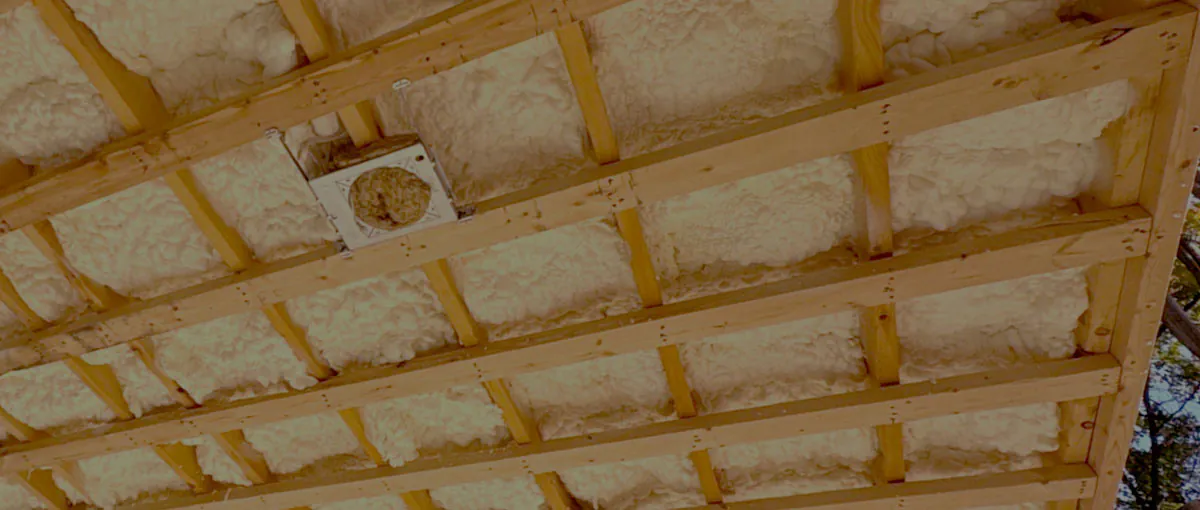
If you live in Maryland or Virginia, unwanted noise can come from traffic, neighbors, thin walls, or busy shared spaces inside the home. That often leads homeowners to ask the wrong question: “Do I need soundproofing?” In many cases, what they really need is better insulation.
The difference matters because soundproofing and insulation are not the same thing. Soundproofing is designed to block sound between spaces. Insulation is designed to slow heat transfer, but it can also help reduce noise. The Environmental Protection Agency (EPA) found that indoor noise above 45 decibels can disrupt sleep and daily life. That means the wrong solution can waste money and still leave the problem unsolved.
For many Maryland and Virginia homeowners, the best answer is not choosing one or the other. It is determining whether the main issue is room-to-room noise, overall comfort, energy loss, or outside sound coming through the building envelope. If you are not sure where to start, a professional estimate for your home and attic insulation can help you narrow down the right solution.
What Is Soundproofing?
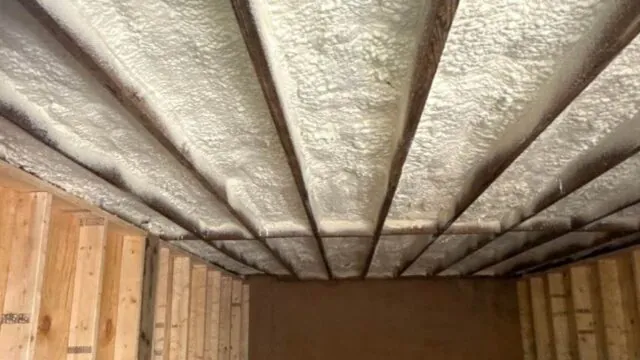 Soundproofing is the process of blocking sound from traveling between spaces. It works by adding mass, sealing air gaps, and using materials or assemblies that reduce vibration and sound transfer. One common measurement is the STC rating home insulation professionals use to compare how well a wall or floor reduces airborne sound. A higher STC (Sound Transmission Class) rating usually means less sound gets through.
True soundproofing is usually best for specific spaces, such as a home theater, music room, studio, or bedroom next to loud equipment. In those cases, dedicated materials may be needed to achieve sound isolation, not just general noise control.
Locally, in dense urban areas in Maryland and the DC suburbs of Northern Virginia, noise is more than just an annoyance; it’s a health factor. A 2014 CDC economic assessment found that environmental noise pollution increases the risk of hearing loss, stress, sleep disruption, and cardiovascular disease in Americans. Reducing noise pollution both inside and outside a home can make an important impact.
What Is Insulation?
Insulation is meant to regulate temperature by slowing heat transfer. Its performance is measured by R-value. The higher the R-value, the greater the insulation’s thermal resistance. Common insulation materials include spray foam (both open-cell and closed-cell), fiberglass batts, cellulose, and mineral wool.
When homeowners compare acoustic insulation vs thermal insulation, they often think they need to choose between comfort and quiet. The good news is that some insulation materials can help with both, especially when installed in exterior walls, attics, and crawl spaces. Spray foam is one of the best examples of noise reduction insulation for Virginia and Maryland homes. Open-cell and closed-cell foam both improve the building envelope, while also helping to reduce sound transmission.
Open-cell foam is flexible and more porous, which makes open-cell spray foam sound absorption a real benefit in walls and between floors. Closed-cell foam is denser and more rigid, so it adds strong thermal performance and some sound-blocking value as well. Spray foam wall insulation can be a smart upgrade for homeowners who want more than one benefit from a single project.
Key Differences and When You Need Each
The simplest way to look at it is this: soundproofing blocks sound, while insulation softens the path sound takes and improves thermal efficiency at the same time. The distinction matters because the right solution depends on the goal of either eliminating noise in a dedicated room versus reducing the overall noise and heat entering or leaving your home.
Application Guide for Maryland and Virginia Homeowners
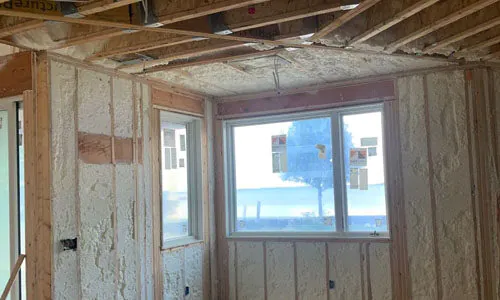 Use insulation such as residential spray foam when the goal is to:
- Lower energy bills.
- Reduce drafts.
- Quiet outside noise coming through walls, attics, or crawl spaces.
- Deliver thermal and acoustic improvement with a single product.
Use dedicated soundproofing when you want to:
- Isolate a media room, studio, or music room.
- Reduce noise between interior rooms or floors.
- Address impact noise like footsteps or furniture movement.
For most Maryland and Virginia homeowners, upgrading their building envelope’s insulation is the better starting point. The Department of Energy (DOE) notes that adding insulation to an existing home can often pay for itself quickly through lower utility costs and better comfort. It’s also smart to review attic insulation code requirements in Maryland and Virginia when planning improvements to ensure everything is code compliant.
Frequently Asked Questions
Q: Does insulation help with soundproofing?
A: Yes, to a point. Insulation, such as spray foam, will not replace true soundproofing in a studio or theater, but it does dampen and absorb sound to help reduce noise moving through exterior walls, attics, and crawl spaces.
Q: What’s the difference between soundproofing and sound absorption?
A: Soundproofing blocks sound from passing between spaces by adding mass and decoupling materials. Sound absorption reduces how much sound energy moves or echoes within a space. Insulation is more closely tied to absorption than full sound isolation.
Q: What insulation is best for reducing noise in a Maryland or Virginia home?
A: Spray foam is one of the best all-around options for exterior walls, attics, and crawl spaces because it combines air sealing, thermal performance, and noise control. Open-cell foam is especially effective at absorbing airborne sound through wall cavities.
Q: Do I need both soundproofing and insulation?
A: Sometimes, but most homeowners should start with insulation first. It solves broader comfort and efficiency issues and often improves noise levels at the same time.
Q: How much can proper insulation reduce noise?
A: It depends on the material, thickness, and where it is installed. Still, it can make a noticeable difference in everyday comfort and real quality-of-life benefits.
Count on Foam InSEALators: Your Partner in Both Comfort and Quiet
For most homeowners in Maryland and Virginia, insulation is the best first step. It improves energy efficiency, helps reduce noise in the areas that matter most, and makes their home more comfortable overall. Spray foam insulation, whether open-cell for sound absorption or closed-cell for thermal performance and mass, is one of the most versatile solutions for improving a home’s efficiency and sound levels. Dedicated soundproofing can still be useful for special spaces, but the building envelope usually comes first.
Foam InSEALators has served Maryland and Northern Virginia since 1994, helping homeowners choose insulation that works best for their home, budget, and goals. For a quieter, more efficient home, contact us today to schedule your free estimate.
References
Centers for Disease Control and Prevention. “About Sleep and Your Heart Health.” CDC Heart Disease, www.cdc.gov/heart-disease/about/sleep-and-heart-health.html.
Hammer, Matthew S., et al. “Valuing Quiet: An Economic Assessment of US Environmental Noise as a Cardiovascular Health Hazard.” American Journal of Preventive Medicine, vol. 49, no. 3, 2015, pp. 345–353. CDC Stacks, http://stacks.cdc.gov/view/cdc/38816.
U.S. Environmental Protection Agency. “EPA Identifies Noise Levels Affecting Health and Welfare.” EPA Archive, www.epa.gov/archive/epa/aboutepa/epa-identifies-noise-levels-affecting-health-and-welfare.html.
U.S. Environmental Protection Agency. “Clean Air Act Title IV – Noise Pollution.” U.S. EPA, www.epa.gov/clean-air-act-overview/clean-air-act-title-iv-noise-pollution.
U.S. Department of Energy. “Insulation Materials.” Energy Saver, www.energy.gov/energysaver/insulation-materials.
U.S. Department of Energy. “Where to Insulate in a Home.” Energy Saver, www.energy.gov/energysaver/where-insulate-home.
U.S. Department of Energy. “Adding Insulation to an Existing Home.” Energy Saver, www.energy.gov/energysaver/adding-insulation-existing-home.